

Three different insurance policies share the word Haftpflicht in German, and freelancers routinely buy the one that does not cover them. What sues you is a financial loss caused by your work, not a visitor tripping over your laptop bag, so the cover you need is professional liability including pure financial loss. Almost no freelance profession is legally required to hold it, but client contracts often are. Vendor prices in 2026 run from around €14 to €58 a month depending on the trade. And the cheapest risk reduction is free: a liability clause in your own contract.
Ask a room of freelancers whether they have Berufshaftpflicht and most hands go up. Ask what it pays for and the answers scatter. That gap is expensive, because the German market sells three separate products under overlapping names and only one of them covers the thing that actually happens to freelancers.
Three policies, one confusing word
The GULP guide of 6 May 2026 draws the line clearly.
Vermögensschadenhaftpflicht covers pure financial loss: damage with no preceding injury or broken object. Their example is the one every developer recognises. A programmer builds a webshop, the shop contains a pricing bug, the client loses roughly €9,000. Nothing was damaged, nobody was hurt, and the client still has a claim.
Berufshaftpflicht is the broader term insurers use for professional errors, and for IT, consulting and creative work it normally bundles the pure financial loss cover above.
Betriebshaftpflicht is something else entirely: personal injury and property damage caused during your work. The classic case is physical, someone trips in your studio, you knock a client's monitor off a desk. If you work in other people's offices and in their data, this is the policy you probably do not need first, and it is the one many freelancers buy by mistake.
The test is simple. What can your work destroy? For most of us the answer is money, deadlines and data, not furniture.
Nobody makes you buy it, except your client
For most freelance professions there is no statutory insurance duty. The exceptions are the regulated ones. § 51 BRAO requires lawyers to insure against pure financial loss with a minimum sum of €250,000 per claim; § 67 StBerG does the same for tax advisers, supervised by their chamber. Architects have rules of their own in state law. If you are none of those, the law is silent.
Your clients are not. Framework contracts with corporates and agencies frequently make a policy and a minimum sum a condition of signing, and the certificate gets requested before the first invoice. There is no published data on what sums are typically demanded, and brokers who quote you a market standard are quoting their own experience, so treat any number you hear that way. What you can do is read the insurance clause in the contract in front of you, check the sum it names against the sum in your policy, and settle the difference before you quote the project, not after you win it.
What it costs in 2026
Both sets of figures below are vendor prices. Neither is independent market research, and your own premium depends on revenue, cover sum and claims history.
The insurtech DigiCare published ranges on 3 July 2026, monthly, gross including the 19 percent Versicherungssteuer, at what it calls the market-standard €3m sum insured: about €58 for an IT freelancer or developer, €30 to €70 for a consultant, €14 to €35 for creative freelancers, €5 to €12 for educators. DigiCare states plainly that these are ranges from publicly visible provider examples plus its own market observation.
freelancermap publishes starting prices from the insurer exali, last updated 17 November 2025 and sourced to exali's Ralph Günther: about €207 a year for IT liability, €218 for media, €191 for consulting, €382 for architects, with deductibles from €0 in consulting to €2,500 per claim for architects and about €250 for IT and media.
Two things follow. The spread between trades is real, and the gap between a starting price and your price is the deductible and the cover sum. Compare on both, not on the monthly figure.
The clause that costs nothing
As a sole trader you are liable without limit, including your private assets. Insurance caps the payout, not the liability. The contract is where you cap the liability itself, and it is free.
What you cannot do: under § 309 Nr. 7 BGB standard terms may not exclude liability for injury to life, body or health, nor for gross negligence. Under § 307 BGB a clause is void if it unreasonably disadvantages the other side, in particular where it guts the essential duties that make the contract worth having. Those essential duties, the Kardinalpflichten, are exactly what your client hired you for, so a clause that excludes your core work is not a clause, it is decoration.
What usually holds: limits on secondary obligations, on damage that was not foreseeable when the contract was signed, and on consequences of force majeure. In practice the workable pattern is a cap on foreseeable, typical damage, set at a number that relates to your fee or to your cover sum, with intent and gross negligence carved out and life, body and health untouched. Negotiate it in the framework contract, not in the middle of an incident.
Which contract type you signed changes the exposure too, because acceptance and warranty work differently under a Werkvertrag than under a Dienstvertrag. Our piece on Werkvertrag vs Dienstvertrag walks through the difference, and the usage rights clause is the other place where a single sentence decides who carries a risk.
What is never covered
One exclusion comes from the law itself. Under § 103 VVG the insurer does not pay if you caused the damage "vorsätzlich und widerrechtlich". Everything else is defined by your policy wording, which is why the boring half hour with the terms matters: look for the sum insured, the deductible, the sublimits for data loss and copyright infringement, and whether work delivered before the policy started is covered. The broader insurance picture for freelancers sits in our overview.
Mistakes are the normal case
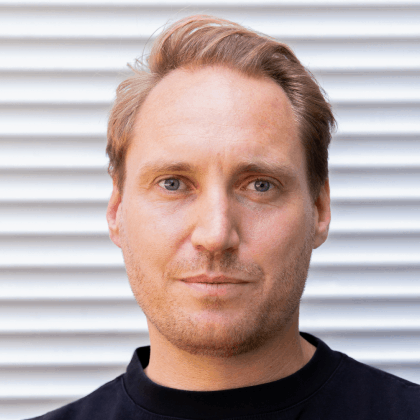
Ralph Günther founded and runs exali, an insurer that covers freelancers, so his interest in this topic is commercial and worth stating up front. His Freelance Unlocked session was not about insurance at all; it was about speed. But it is the clearest argument for why the cover exists.
exali started, he says, in the worst possible year:
"exali was founded in 2008, right in the middle of the financial crisis. Freelancers were dropping out of projects in droves, and I had this brilliant idea: we want to insure freelancers." (Ralph Günther)
His diagnosis of German working culture is the same one that makes a liability policy useful:
"I think we cling to perfectionism because we are afraid of making mistakes." (Ralph Günther)
His answer is to ship earlier and iterate, on the argument that in a fast market the planning is now the risk. That only works if a mistake is survivable. Insurance and a liability clause are what make it survivable for a one-person business:
"Failing is productive. Those mistakes produce insight, and the change of direction is part of progress." (Ralph Günther)
You do not have to buy his product to take the point. A freelancer who cannot afford a single bad outcome will price defensively, promise less, and take smaller projects. That caution costs more per year than the premium does.
What to do on Monday
- Open your policy and find the word Vermögensschaden. If it is missing, you may be insured against the wrong risk.
- Write down your sum insured and your deductible, then compare both against the insurance clause in your largest client contract.
- Get two quotes at the same cover sum and the same deductible. Anything else is not a comparison.
- Add a liability clause to your own contract template: cap on foreseeable typical damage, intent and gross negligence excluded from the cap, life, body and health untouched.
- Ask your biggest client what sum they actually require. If the number is lower than you assumed, you have been overpaying; if it is higher, you have been exposed.
Insurance protects the downside of the work you have. If the pipeline is the thinner problem, a free 9am profile puts you in front of DACH companies hiring freelancers directly.
This article is general information for practitioners and does not replace legal or insurance advice. Quotes by Ralph Günther translated from German.
Freelance Unlocked is co-organized by 9am together with Uplink and freelancermap. This article draws on the session of Ralph Günther at Freelance Unlocked 2026. Watch the full talk above, and join us at the next edition: freelanceunlocked.com.