

Three big proposals since July, three times the same pattern. The startup strategy lists 152 measures in the subjunctive, with no target and no budget line. The income tax reform pulls the 45% rate down to €250,000 and adds a new 47% step €30,000 above it, paid mostly by the Mittelstand. The pension package was a complete work of art for ten weeks and is now bargaining material. What we lack is not a plan, it is ambition. Sachsen-Anhalt showed on Sunday where that leads.
Vier Millionen+ · Episode 3 · Marc Clemens & Cathi Bruns
44% for the AfD in Sachsen-Anhalt. Record turnout. And in Berlin nobody seems to understand why. Cathi Bruns and I recorded episode 3 of our podcast two days before the election. Without meaning to, we spent an hour describing exactly what happened on Sunday.
The diagnosis is uncomfortable, and it runs through every topic we touched: a lack of ambition is driving our economy into the ground and pushing people to the political fringes.
We administrate. We do not shape.
Since our last recording on 5 July, the federal government has put three big projects on the table: a start-up and scale-up strategy, an income tax reform, and the final report of the Rentenkommission, the commission set up to redesign the state pension. On paper that is a productive summer.
In reality it is the same pattern three times over. We no longer produce reforms, we administer. We do not build anything forward, we patch things so they do not get worse. We have a political culture in which ministers criticise a bill in public and vote for it the next day, and in which a commission's results are reopened by the very people who commissioned them, ten weeks later. And we no longer have figures who are willing to take responsibility and see something through.
On the podcast Cathi found the word that has stayed with me since. What is missing is not the plan. Politics has plenty of plans. What is missing is the ambition, the will to win somewhere.
Here are the three examples in detail.
1. The start-up and scale-up strategy: 152 measures in the subjunctive
On 24 July the cabinet adopted the new start-up and scale-up strategy. 152 measures, eight fields of action, and to be fair: a lot of it is right on the substance. Opening public tenders to young companies. Mobilising capital. The "Schneller Gründen" pilot for faster company formation.
The problem is not what is in there. The problem is how it is in there.
The verbs. I read the whole paper. The dominant formulations are "we will examine", "it will be examined", "we aim to", "we will advocate for". On top of that sits a general reservation: every measure is subject to available budget funds and prejudges no current or future budget negotiations. Without a budget line, a strategy is a declaration of intent with a table of contents.
The targets. There are none. No KPIs, no deadline, no unicorn target. Take the tax number, the centrepiece of "Schneller Gründen". Anyone founding a company in Germany today waits not weeks but months for their tax number. No tax number, no correct invoice. No invoice, no revenue. The paper says the tax number should arrive "faster". Faster than what? Real time would be no technical problem. Four weeks appears in a different document. The "24-hour company formation" appears on government websites and in the coalition treaty, but the term does not appear in the strategy paper itself. If you never define a target, you can never miss it.
The gap. What barely appears in the paper is the one thing the US and China are talking about right now to the exclusion of almost everything else: AI infrastructure, data centres, energy. Over there, whole election campaigns turn on how many additional gigawatts you can get onto the grid to stay in the AI race. Here, AI shows up in the strategy paper only in scattered form: no field of action of its own, an "AI capital initiative" with no target sum, a few regulatory sandboxes. Energy: nothing. And this from a ministry explicitly responsible for economic affairs and energy. One week before our recording, the digital minister himself warned publicly about a bottleneck in AI data centres in Germany.
Cathi's verdict: "Where are the unicorns supposed to come from if we have no electricity for them?"
What I miss is the overarching goal. In any company you test decisions against a strategy: does this pay into our objective or not? If Germany said "we want to make Europe the leading market for X", you could measure every piece of legislation against it. Without a goal, every measure stays small change, and nobody can tell people why they should support it.
2. The income tax reform: a Mittelstand tax under a new name
On 1 July the Koalitionsausschuss, the coalition leaders' committee that settles disputes between the governing parties, agreed on an "income tax reform". On 2 September the cabinet adopted the bill. The word "reform" is generous.
What happens: the 42% top rate will apply from a slightly higher income. Small and middle incomes are relieved through the basic allowance, the child allowance and child benefit, by around €10 billion a year in total according to the finance ministry, at full effect from 2028. A family with two children on a middle income will feel about €600 a year of that. Rising social insurance contributions and inflation will predictably eat it again.
And then the actual change: the existing 45% rate for high earners will apply from €250,000 of taxable income (previously €277,826). And from €280,000 there is a new step: 47%.
A gap of €30,000. For that we get a new tariff, new legislation, new training at the tax offices, new advisory work, new bureaucracy. You can argue about taxes on high incomes. But if you want one, set it at €350,000, €400,000 or a million, where a second tariff actually distinguishes between anything. At a distance of €30,000 it is administrative effort with no discernible purpose.
Who pays for this? Around 70% of German companies are not corporations but sole proprietorships and partnerships (IfM Bonn puts it at 59% sole proprietorships and 12% partnerships). Their business profit is subject to income tax. This is not a tax on "the rich". It is a tax on the investment capital of the Mittelstand, in a location crisis in which too little is already being invested.
What should have come first: the reform of the Thesaurierungsbegünstigung, the relief that lets you leave profits in the business at a reduced rate instead of taxing them in full straight away. It is in the coalition treaty (as it was in 2013 and in 2021) and it would let sole proprietors retain profits in a way closer to how corporations do. The existing rule is so complex that almost nobody uses it. Had that come first and the income tax at the top been raised afterwards, the Mittelstand argument would not exist. It was done the other way round.
The chronology is worth noting. On 1 September, economics minister Katherina Reiche speaks up with something like an ordoliberal interjection, her ministry demands improvements, and reports talk of a "hidden tax increase". On 2 September she votes for the bill in cabinet. The finance minister is now annoyed that somebody is playing "opposition inside the government". The entrepreneurs this is actually about do not appear in that argument at all.
We should stop calling things "reform" when they are ordinary day-to-day business. Every government turns a number somewhere. A reform changes the system. Here the system stays exactly the same. The only novelty is a super-rich tax that starts €30,000 above the rich tax.
3. The pension reform: from complete work of art to bargaining chip in ten weeks
The shortest chapter, because it explains itself.
On 23 June the Rentenkommission presented its 33 recommendations. Chancellor Merz: "All elements of this reform package must now be implemented swiftly." Labour minister Bas: "There is no cherry-picking here, it is a Gesamtkunstwerk", a complete work of art. On 3 September, one day before our recording, the same labour minister called for renegotiation. Retirement at 63, reduced earning capacity pensions, mini-job rules: all open again.
What is not being reopened: compulsory pension insurance for the self-employed, in our view the most damaging item in the whole package. Cathi on the podcast: "That one belongs in the bin. If they are reopening things now, then please reopen that, and not the parts that are actually good."
And a word on the terminology. Something that is politically negotiated should not be called a "commission". A commission consists of academics who present independently. What we had here was a political programme in which a few experts were heard. If you use terms inflationarily you break them, and you stop being taken seriously. "Reform", "commission", "relief": all three have lost their meaning in a political context.
4. What this has to do with Sachsen-Anhalt
People notice all of this. They are not apathetic. Around 77% turnout in Sachsen-Anhalt (2021: 60%) is the opposite of apathetic. They are mobilised. Just not by the centre, but against it.
And to be clear: the AfD is not an answer to that frustration, it is a beneficiary of it. Its entire programme is populism without substance: a sorry spectacle, a damning verdict on this country, and precisely the opposite of what Germany needs to move forward. That it wins anyway is no achievement of the fringes. It is the failure of a centre that has vacated the field voluntarily.
What we lack is a spectrum inside the serious parties. There used to be a range from the Greens to the FDP, with the SPD and the Union in between, and a political culture in which people could work together even when they did not agree politically. Today the impression is that there is no working level left, only fear of one's own demise and the clientele politics that follows from it.
For the self-employed, none of this is new. We have felt neither understood nor relevant for years. But when that feeling reaches broad parts of society, every alarm bell should be ringing.
What instead? Ambition and freedom.
We did not want to end this episode in negative mode, so we tried to answer the question: what would have to happen?
Politics has to return to its core areas and do those perfectly. Instead of reopening every last reform package before every election.
Trust people more. More room to move, less governing into people's lives. Anyone who sees that training, extra work and commitment pay off will join in. Anyone who sees that everything beyond a certain point gets shaved off will do less. Cathi calls it "Bleib-unten-Politik", stay-down politics, and right now it is our operating system.
A story about getting ahead that people can connect to. In Germany, opportunity always ends in permanent employment. That is the horizon. It should be "sky is the limit". Not against being an employee, but for people who want to rise and organise the rise of others along the way, by creating jobs.
A goal to test against. If we do not know where we want to win, every measure stays small change. Ambition means setting a direction the country can orient itself by. And the fish rots from the head: if politics does not model ambition, the country cannot follow.
Ambition and freedom are nothing other than entrepreneurship. Think big, price in failure, replan, learn from the market, want to win. Those values have long been democratised; entrepreneurship is no longer the preserve of people who inherit dad's company. But politically we still treat it that way: as a small group you can keep loading up, even though it has been signalling for years that this is no longer working.
Anyone who wants to keep the fringes small has to make the centre big again. With ambition, not with appeals.
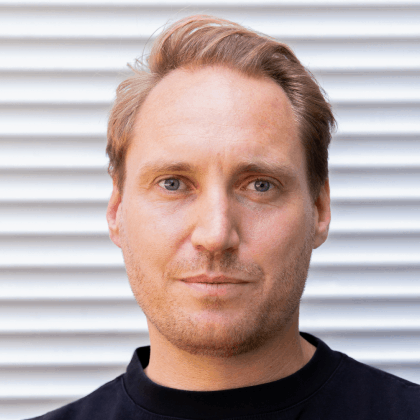
Vier Millionen+ is the podcast about self-employment by Marc Clemens and Cathi Bruns. Episode 3 is available wherever you get your podcasts. Feedback, disagreement and guest suggestions are welcome in the comments or directly to us.
Sources
- Bundesregierung: cabinet adopts the Start-up and Scale-up Strategy
- Start-up and Scale-up Strategy of the federal government (PDF)
- Bloomberg: digital minister Wildberger warns of an AI data centre bottleneck
- Bundesfinanzministerium: government launches the income tax reform (2 September 2026)
- Ebner Stolz: the income tax reform of the coalition committee
- "Heimliche Steuererhöhung": Reiche attacks Klingbeil's tax reform
- IfM Bonn: enterprises by legal form (PDF)
- DATEV magazin: DStV on the coalition treaty, the option model and the retained-profit relief
- ZDF: Merz and Bas want the whole commission package implemented (23 June 2026)
- Pension reform: Bas calls for renegotiation of the 33 commission recommendations (3 September 2026)
- VGSD: what the 33 pension commission recommendations mean for the self-employed
- ZDF: Sachsen-Anhalt state election 2026, results
Vier Millionen+ is the podcast by 9am co-founder Marc Clemens and Cathi Bruns. Opinion.