

Germany gives freelancers two safety nets, and the better one has a deadline. Within three months of starting self-employment you can opt into statutory unemployment insurance under § 28a SGB III; in 2026 that costs €102.83 a month, half that in the founding year and the year after, and it is gone if you miss the window. Fall back is the Grundsicherung, which replaced Bürgergeld on 1 July 2026 with stricter work expectations, no more one-year grace on savings, and a Regelbedarf of €563. Check your start date today, and if you are inside the window, apply this week.
Four in ten freelancers in DACH have no secured utilisation: 43% of the 5,412 respondents in the Freelancer-Kompass 2026. Most cope with a reserve and a pipeline. Few know that the state offers a third layer, and that the offer expires.
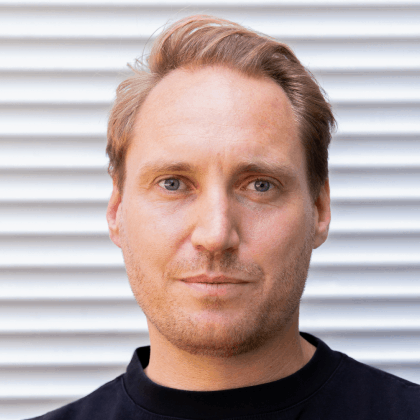
Hannah Trute, a lawyer and co-founder of the founder academy Gründer Studios, opened her Freelance Unlocked 2026 session by asking the room for their worst-case scenarios. Not being able to pay the rent. Moving back in with the parents. Going broke. She named the pattern:
"Existential fear, the fear of losing the basis of your own existence." (Hannah Trute, translated)
Her point was that the fear shrinks once the rules are understood: "Once you have understood them, not much can happen anymore, they become more predictable, and with that the uncertainty fades." This article is that exercise for the two rules that matter when the pipeline runs dry.
Net one: unemployment insurance you can buy, once
The conclusion first: if you started freelancing less than three months ago, you can still join statutory unemployment insurance. If you started earlier, that door is closed.
The legal basis is § 28a SGB III. Three conditions. You work self-employed at least 15 hours a week. In the 30 months before you started, you spent at least 12 months in compulsory insurance, typically as an employee, or you came straight from unemployment benefit. And the application "must be filed at the latest within three months of taking up the activity". Three months after day one, not after you first felt nervous. It goes to the Agentur für Arbeit at your place of residence, which publishes a leaflet and the form.
What it costs in 2026. A fixed percentage of a fixed number, not of your income: 2.6% (§ 341 SGB III) of the monthly Bezugsgröße, €3,955 in 2026 per the BMAS ordinance. That is €102.83 a month. In the calendar year you start and the whole following year, § 345b SGB III halves the basis: €51.42. Both figures are derived from the 2026 law; the Bundesagentur's leaflet still shows 2014 examples.
What it pays. With no wage slips, the benefit is calculated from a notional wage by qualification group (§ 152 SGB III). With the 2026 annual Bezugsgröße of €47,460 that is €158.20 a day for a university degree (about €4,746 a month gross), €131.83 for a Meister or technical college qualification, €105.47 for a completed apprenticeship and €79.10 without formal training. Arbeitslosengeld is 60% of the notional net, 67% with a child (§ 149 SGB III). Twelve months of contributions buy six months of benefit, 24 buy twelve (§ 147 SGB III).
The fine print that bites. You cannot cancel for five years. Fall more than three months behind on contributions and the cover ends. Interrupt your self-employment twice with a benefit claim each time and you cannot join a third time. For a graduate paying €103 a month against a notional €4,746, the maths is easy. For someone planning two freelance years and then a return to employment, the five-year lock deserves a second look.
Net two: the Grundsicherung since 1 July 2026
Conclusion first: if you missed the window or your benefit ran out, basic income support exists for self-employed people too, but it changed on 1 July 2026 and now expects more of you.
Bürgergeld became the Neue Grundsicherung, passed by the Bundestag on 5 March and the Bundesrat on 27 March 2026, in force step by step from 1 July; the benefit is now called Grundsicherungsgeld. The Regelbedarf for 2026 is €563 a month for a single adult, €506 per partner, €390 for a child aged 6 to 13 and €357 under 6, plus reasonable rent and heating. A Nullrunde: the formula gave €557, but the law forbids cuts once granted.
What is new, according to the Bundesregierung's summary:
- Work "to the maximum reasonable extent", full-time for singles where reasonable. The Jobcenter may push you towards employment rather than fund a slow business indefinitely.
- The one-year Karenzzeit on savings is abolished; the Schonvermögen is now linked to age. The official page does not print the amounts, so ask before you assume your reserve is safe.
- Housing costs in the first year are covered up to 1.5 times the local threshold.
- From the second missed appointment the Regelbedarf is cut by 30% for a month; three in a row can end the payment including rent.
- The parental exemption from job-seeking ends when the youngest child is 14 months old, not three years.
One honest gap: neither the BMAS release nor the Bundesregierung page says how self-employed income is counted under the new rules. The old SGB II practice assessed operating profit provisionally for six months and settled up afterwards; whether that survived unchanged, we could not confirm from a primary source. Ask the Jobcenter in writing and bring your Einnahmenüberschussrechnung.
Two smaller nets most freelancers forget
Wohngeld. If you earn something but not enough for the rent, the housing allowance sits between full income and Grundsicherung. It depends on household size, income and rent; for the self-employed the income that counts is profit. Apply at the local Wohngeldbehörde; the ministry's Wohngeldrechner gives a first estimate.
Kinderzuschlag. Parents with a low but real income can get up to €297 per child per month on top of Kindergeld, the figure the Familienportal has shown since 1 January 2025, with a minimum gross income of €900 for couples and €600 for single parents. Apply at the Familienkasse.
None of this replaces the two levers you control, pipeline and reserve. Handling financial uncertainty covers those, the financial traps freelancers fall into the mistakes that make a dry quarter dangerous, and the 2026 mood surveys show you are not alone in the fear. The nets are for when all of that was not enough.
Trute's second lesson applies to every one of these forms: "Resilience does not solve the problem, but it lets us look beyond it and find healthy ways of coping." A signed application is a healthy way of coping.
This article is a practitioner explainer, not legal advice; your Agentur für Arbeit, Jobcenter or a Fachanwalt für Sozialrecht can tell you what applies to your case.
What to do on Monday
- Find your start date. If it is less than three months ago, download the § 28a form today and hand it in this week.
- Check the precondition. Twelve months of employment in the 30 months before you started, or benefit immediately before. If no, skip to step 4.
- Decide with the five-year lock in view. €51.42 a month in the first two calendar years, €102.83 afterwards, for six months of benefit after a year. Will you still be freelancing in 2031?
- Write the fallback on one page. Regelbedarf €563 plus rent, against your monthly fixed costs. That gap is what your reserve covers while an application is decided.
- Ask one question in writing. Your Jobcenter: how is self-employed income assessed under the Grundsicherung since 1 July 2026? Keep the answer.
The best insurance against an empty month is still a full one. A free profile on 9am puts your skills in front of companies across DACH that are looking for freelancers right now, which is the cheaper net to build first.
Freelance Unlocked is co-organized by 9am together with Uplink and freelancermap. This article draws on Hannah Trute's session at Freelance Unlocked 2026. Watch the full talk above, and join us at the next edition: freelanceunlocked.com.